
In Short:
In 2026, LinkedIn Personal Branding is no longer optional for B2B agency owners—it’s a core sales asset.
With millions of new businesses entering the market every year, buyers rely on LinkedIn to evaluate credibility before making decisions. In just seconds, your profile and content determine whether you’re trusted or ignored.
Data shows that:
- LinkedIn now has over 1.2 billion users
- Most decision-makers actively use the platform
- Founder-led content gets significantly more engagement than company pages
A strong LinkedIn presence does three things:
- Builds trust before the first conversation
- Pre-sells your expertise at scale
- Attracts higher-quality inbound leads
For B2B founders, the opportunity is simple:
Those who consistently show up with clear positioning and valuable content will stand out in a crowded market and win better clients.
Think about the last time you considered working with someone new.
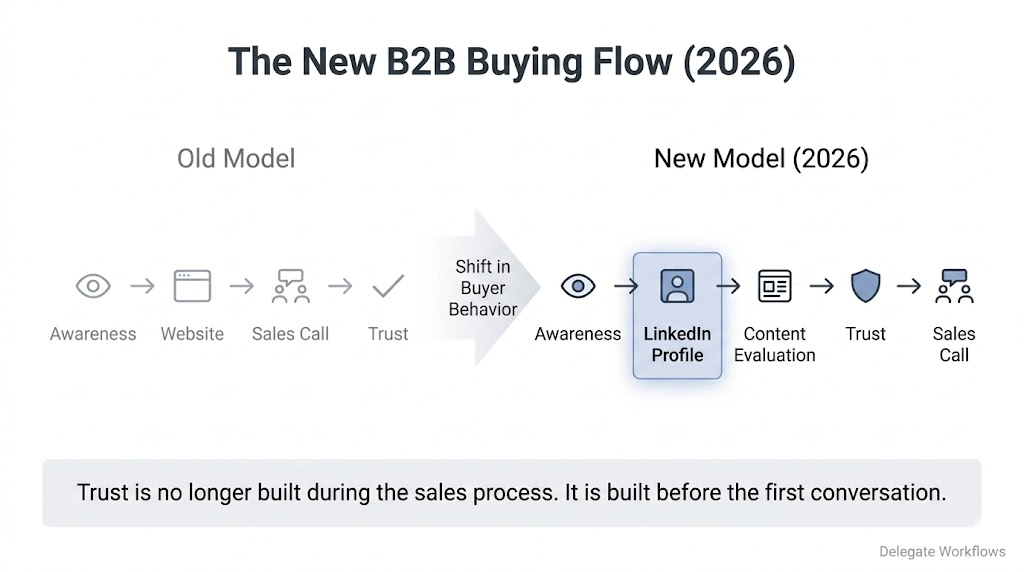
Before you reached out, what did you do? You probably looked them up. You scanned their profile. You tried to get a sense of how they think.
Most buyers do the same. And increasingly, they’re doing it on LinkedIn.
A few years ago, LinkedIn personal branding felt optional.
Something you did if you had time.Something that “might help” with visibility.
That assumption doesn’t hold anymore.
Because the way B2B buyers make decisions has quietly changed, and most agency owners haven’t updated how they show up.
The market saturation
Every month, 496,443 new business applications are filed in the United States.
That is not an annual figure. That is every thirty days, according to the U.S. Census Bureau’s Business Formation Statistics released in March 2026. Of those, 145,918 are classified as “High-Propensity” applications, businesses with a real structural probability of becoming significant employers.
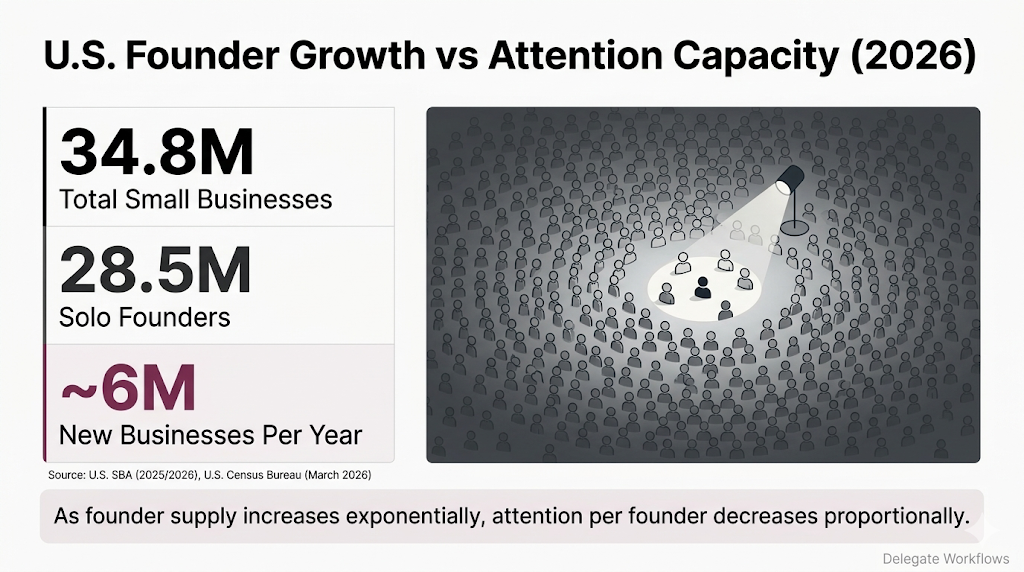
Do the math: more than 5 million new competitors enter the market annually. They have websites. They have LinkedIn profiles. Many of them offer services that, on paper, look nearly identical to yours.
This is the market every B2B founder is operating in right now. And it creates one defining problem: how does a buyer decide who to trust when everyone looks the same?
They don’t look at your website first. They don’t call your references. They Google your name. They go to LinkedIn. And in the 90 seconds they spend on your profile, they make a decision if you’re credible, or they are not.
Your LinkedIn personal brand is not a marketing tactic. It is your most important sales asset, and most B2B founders are treating it like an afterthought.
The Numbers That Make This Impossible to Ignore
Before we discuss strategy, let us look at the landscape clearly.
According to U.S. Small Business Administration data, there are now 34.8 million small businesses in the United States, with 4.88 million operating in the Professional, Scientific, and Technical Services sector, the direct B2B category. Of the total pool, 82% (roughly 28.5 million) are solo-founder operations with no employees.
This is significant for one reason: when you have no team, no office, no sales force, and no brand awareness, you are the product. A buyer evaluating your consulting firm, your agency, or your SaaS is evaluating you. Your LinkedIn profile is the first proof point that your promise is real.
Now layer in what’s happening on the platform itself. According to LinkedIn’s Q1 2026 Professional User Report:
- LinkedIn has surpassed 1.2 billion members globally
- In the U.S., 4 out of 5 LinkedIn members are directly responsible for business decisions at their organizations
- 67% of members report trusting LinkedIn more than any other social channel
- Members are 20 times more likely to engage with video or human-centric founder content than with a company page update
That final statistic is the strategic key. Company pages are nearly invisible to buyers. Founder profiles, personal, authoritative, consistently active, cut through in a way no corporate brand account can replicate.
What Investors Are Watching
The data from the venture world reinforces what’s happening in the broader B2B market.
Crunchbase’s 2025 Annual Report (published January 2026) documents that over $280 billion was invested in U.S. startups in 2025, a 46% increase from the prior year, driven largely by the AI infrastructure boom. 187 new companies achieved Unicorn status that year.
What’s notable is not the headline number. It is the shift among investors: firms are increasingly citing “Founder Thought Leadership” as a secondary vetting metric during due diligence. The vast majority of founders who reached Unicorn status in 2025 maintained active, high-authority LinkedIn profiles throughout their funding rounds.
Investors are not passive about this. Before a partner meeting, before a second call, they assess whether a founder has built a credible public presence- a dormant LinkedIn profile or one that reads like a resume rather than a perspective.
Even if you are not raising capital, this pattern should inform how you position yourself. The same vetting behavior that VCs apply to founders is applied daily by procurement leads, enterprise decision-makers, and agency buyers. They are checking whether you have a point of view. Whether you know your domain deeply enough to say something worth reading.
Why Human-Centric Content Wins
Brand trust in general is at a historic low. Buyers are inundated with vendor content, company blog posts, case studies, and sales sequences that all sound the same. They have developed an immunity to corporate-speak. They scroll past company page updates without registering them.
What breaks through is the human voice.
- A founder writing about a real mistake they made and what it cost them.
- A founder sharing a framework they developed from pattern-matching across 40 client engagements.
- A founder disagrees with a widely accepted industry assumption and backs it up with data.
This is what LinkedIn’s own research captures when it says buyers are 20x more likely to engage with founder content than brand content. The multiplier is not primarily about format. It is about the trust signal. When a named individual puts their professional credibility behind a claim, it carries weight that a logo simply cannot.
The strategic implication is that your LinkedIn content is not about awareness. It is about pre-selling trust at scale.
Every post that demonstrates expertise is a silent salesman working 24 hours a day, building the case for why a buyer should choose you before they ever send an inquiry.
How Your Profile Does the Heavy Lifting
When a prospect is evaluating whether to book a discovery call with you, they do not wait for a proposal. They do their own reconnaissance. They are looking to answer three questions:
- Does this person understand my specific problem?
- Have they solved it before demonstrably?
- Is there a community of people who take them seriously?
Your LinkedIn profile answers all three, or it fails to, and the prospect moves on.
Your headline is not your job title.
It is the first line of a value argument. “Founder at Agency X” tells a buyer nothing. “I help B2B SaaS companies reduce sales cycle length by 30% through outbound systems,” tells them everything they need to know to decide whether to read further.
Your featured section is your proof stack.
Case studies, recorded talks, newsletter issues, client results. This is where outcomes live, not credentials.
Your content history is your authority signal.
A buyer scrolling through 90 days of your posts is running a rapid audit: Does this person say things I haven’t heard before? Do they understand the nuances of my industry? Are other credible people engaging with their ideas? Silence on the profile or generic reposts fails this test immediately.
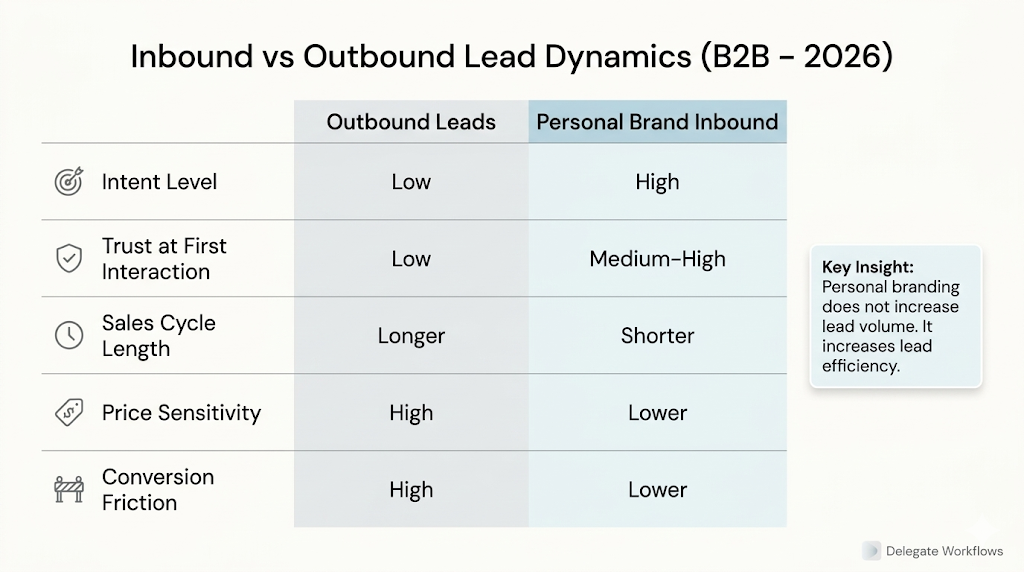
Inbound inquiry quality, not volume, is the metric that matters.
As seen in real client outcomes, a well-executed LinkedIn personal brand does not generate more inquiries indiscriminately. It generates better ones from buyers who have already been pre-sold on your credibility, who arrive at a conversation knowing what you do and believing you can do it. The sales cycle compresses because the trust-building work has already been done.
Where to Start: The Three-Layer Brand Architecture
For B2B founders who are beginning or rebuilding their LinkedIn presence, the framework is straightforward:
Layer One: Positioning clarity.
Before you post a single piece of content, your profile must answer the buyer’s question immediately. Headline, About section, and Featured section should collectively communicate: who you serve, what specific problem you solve, and what evidence exists that you have solved it before.
Layer Two: Content rhythm
Consistency is a trust signal independent of content quality. A founder posting two to three times per week over six months signals staying power. It communicates that this person has enough to say to sustain a presence, which is itself a proxy for depth of expertise. Start with what you know from client work. Write what you have learned, not what you think sounds impressive.
Layer Three: Strategic distribution.
Creating content is half the work. Engaging, deliberately, in the comment sections of buyers and adjacent experts in your space is how an audience discovers you before you have one. The algorithm rewards activity across the platform, not just posts on your own profile.
The Business Case Is Clear
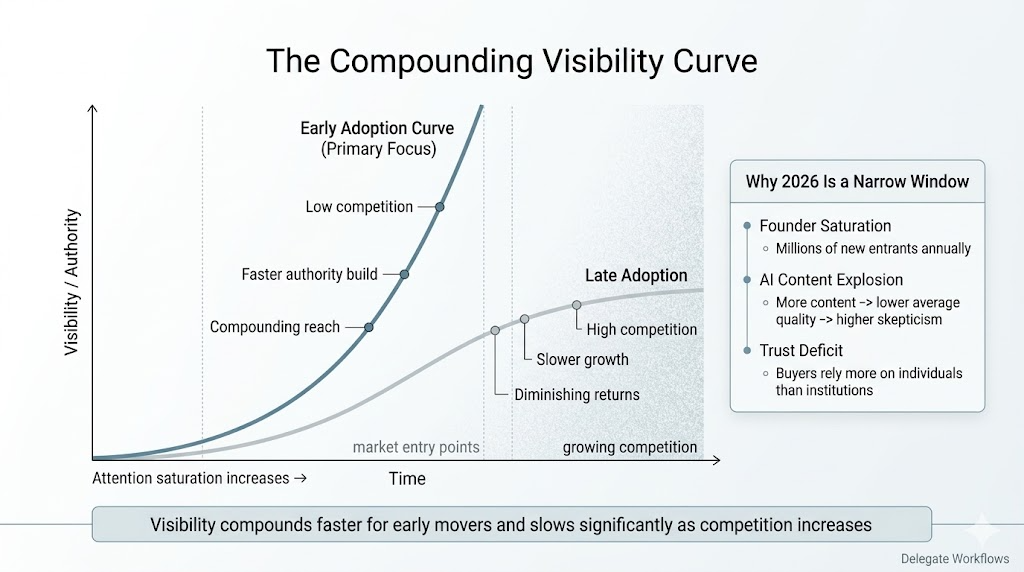
The B2B founders who are generating consistent inbound from LinkedIn are not doing anything different. They are posting regularly, writing with specificity about problems their buyers care about, and making it easy for a buyer to understand exactly what they do and who they do it for.
The platform is a vetting engine. Every day your profile is incomplete, your content is absent, or your positioning is generic, you are losing buyers who would have chosen you if only they had seen something worth stopping for.
With 1.2 billion members, 4 in 5 of whom are business decision-makers, and a trust environment that massively favors human-centric content over brand accounts, the infrastructure for B2B founder authority is already in place.
The only difference is whether you choose to use it.
Ready to build a LinkedIn presence that generates qualified inbound and positions you as the go-to authority in your market? Book a call to discuss what a strategic personal branding system looks like for your business.